welcome post
& a grand tour of my carabiner

dear reader,
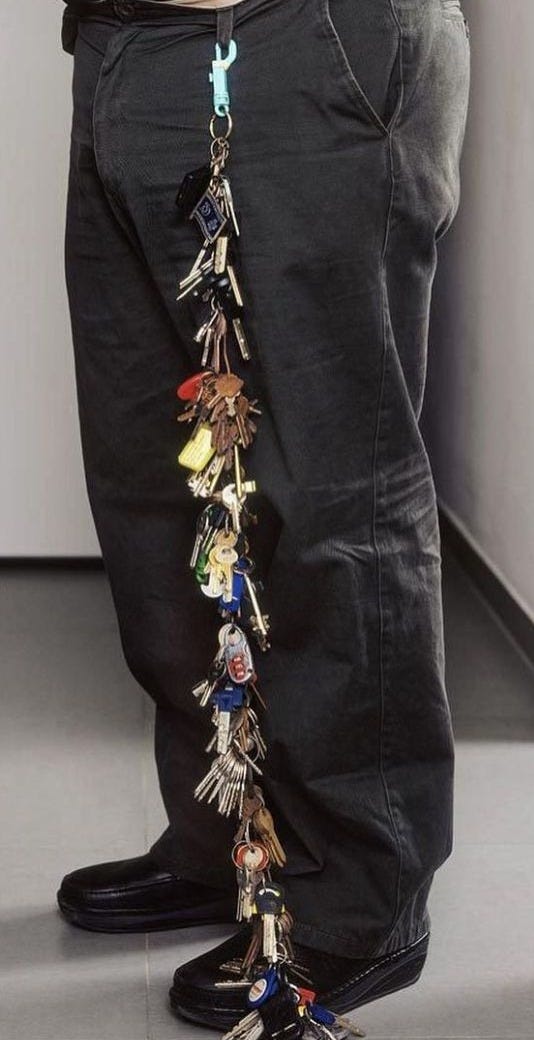
welcome to dyke semiotics! after years of admiring hal fischer’s iconic “gay semiotics” photo series, i decided to pay homage to his project through this substack’s name and the below photograph of my carabiner1. through this newsletter, i plan to think about queer fashion, symbolism, and probably the broader culture. i am not always a “““fashionable””” person, but i’ve always liked it—and i’ve always been interested, specifically, in its function in communication and signaling to others about who a person is—so i think having a place to engage with it will be fun. feel free to follow along.
love,
despy boutris
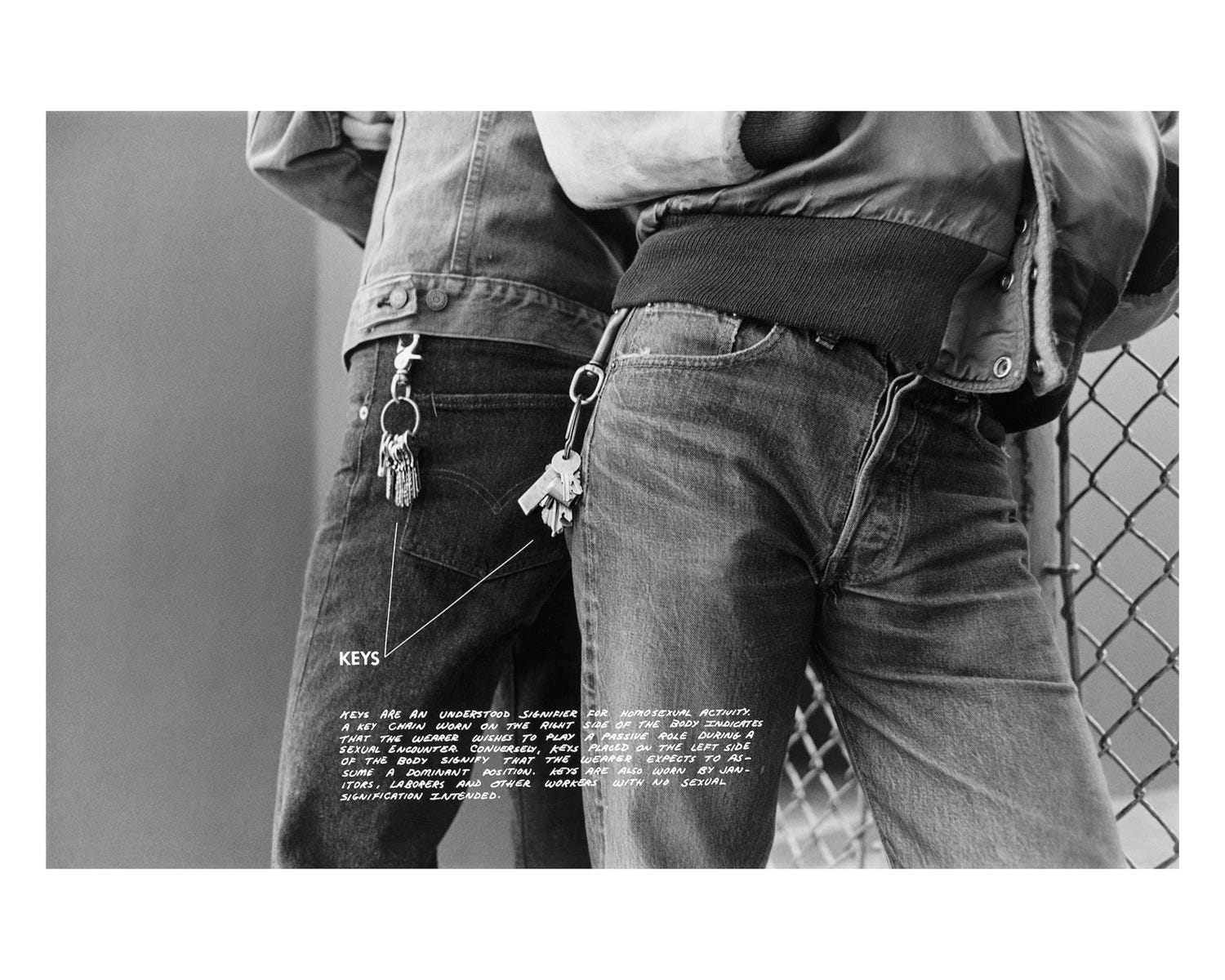

The carabiner seems like a relatively recent lesbian item or stereotype, but its history goes back further than you might think. Christina Cauterucci, in a piece for Slate, argues that “The beltside key ring is one of the most enduring sartorial symbols of lesbian culture, one of the few stereotypes of our kind that’s both inoffensive and true.” Her article traces a lineage of beltside key rings – so often in the form of carabiners – from mid-20th century butch women in blue-collar jobs, who wore them for reasons of practicality, to kink culture and cruising. She also writes that “the semiotics of the carabiner have been largely divorced from sex for today’s lesbian, but key clips are still reliable identity flagging implements.”
Their status as “reliable identity flagging implements” has been acknowledged across the internet; in 2018, Natalia Joseph wrote an article called ‘4 Carabiners to Let That Guy in your Econ Lecture Know You’re Not Interested,’ in which she wrote that “the only women who wear [carabiners] are either rock climbers or massive lesbians.” 5 years earlier, in 2013, blog Her Gay Agenda declared carabiners as “The Lesbian Latch.” In 2016, however, Krista Burton bemoaned the loss of the carabiner’s lesbian significance in The New York Times, writing that “since you all wear carabiners as key chains, we lesbians no longer have any private signals to each other.”